
Length
6 hours in total

Target Audiences
- Designed to support paediatricians in training with little or no previous research experience to learn more about research

Self paced
Work through the module at your own pace. When you have completed the module, you can return at any time to re-review any of the sections.

Free
Log in with your account
Getting started in research and finding the right mentorship
Dr Anu Goenka
Duration: 47 minutes
Summary: The session will provide information and advice on how to navigate the scenario of “I know am interested in research, but I am not sure exactly what I want to do, where I want to do it, and with whom I want to do it”.
From draft to publication: How to write research papers
Dr Rebecca Mitting
Duration: 45 minutes
Summary: Dr Rebecca Mitting has taken hints and tips from her own experience as a paediatric trainee, as well as from the editors of prominent journals in the field, to help trainees answer the question, ‘how do I get a publication during my paediatric training?’.
From data to insight: Making the most of clinical registries in research
Dr Lucy Plumb
Duration: 45 minutes
Summary: This session will introduce the fundamentals of clinical registry data, explaining what registries are and why they play an important role in population health research. We’ll explore the types of questions registries are well suited to answer, along with practical considerations around data quality, bias, and methodological limitations. Finally, we’ll discuss how to interpret and report findings responsibly, ensuring transparency, rigour, and appropriate use of observational data.
Designing an effective research poster: Telling your story visually
Dr Aditi Vedi
Duration: 36 minutes
Summary: This session will cover ideas for designing a visually attractive and informative poster to display your research findings.
PICU Research as a paediatric trainee – How to get involved via Trainee research network(s)?
Dr Janapriya Sugumar
Duration: 9 minutes
Summary: This session will cover how trainee research networks make research more accessible to residents. Using a PICSTAR project, it will show how a clinical question turned into a national survey and a published paper. It will also cover why collaboration matters in a small specialty, and how residents at any stage can get involved.
Research in Action: An East of England TRN Project
Dr Laurentya Olga
Duration: 20 minutes
Summary: This session will showcase a completed research project from the East of England TRN, sharing key lessons learned, practical tips for undertaking resident-led research, and reflections on the project journey.
Open research and research culture
Fiona Booth and Nick Beazley-Long
Duration: 44 minutes
Summary: Everyone knows that it’s good practice to share research data, right? But in reality many health researchers don’t share their data or other outputs related to their research. In this session we will examine open research in the context of sensitive health data and provide some practical advice on some (almost) stress-free ways you can prepare and share your research.
Introduction to genomic research
Dr Caroline Platt
Duration: 25 minutes
Summary: This session will provide an introduction to genomic research, including key concepts and current applications, and its role in improving child health.
Research in community child health: opportunities, challenges and impact
Dr Joanna Garstang
Duration: 35 minutes
Summary: This session will highlight opportunities in community paediatric research, based in clinical practice. It will show examples of how trainees can get involved in research projects alongside of clinical work. It will show that it is possible to have a research career, starting later in life and outside of the typical academic clinical pathways.
The ethical use of AI in research
Dr Helen Oram and Dr Andrea Cockett
Duration: 49 minutes
Summary: This session will explore what the ethical and governance challenges are of integrating AI into your research particularly where it will interact with humans.
This practical, case-based session will examine the ethical and governance issues that arise when AI is used as a research tool or forms part of an intervention involving human participants. We will consider data protection and confidentiality; transparency, explainability and meaningful consent or assent; bias, fairness and inclusion; safety, human oversight and accountability; and reproducibility when AI models and tools change over time.

Dr Anu Goenka
Senior Lecturer & Honorary Consultant in Paediatric Immunology & Infectious Diseases; University of Bristol
Anu’s research explores how we can design new and better vaccines through understanding the function of immune cells that reside in the respiratory tract. He is applying these concepts to the problem of Group A Streptococcus. His research group employs a variety of techniques including wet laboratory (immunology, molecular microbiology), epidemiology/data science and clinical studies/trials.
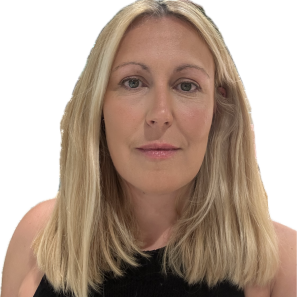
Dr Rebecca Mitting
Consultant in PICU and Honorary Senior Clinical Lecturer, Imperial College London
Dr Rebecca Mitting is a PICU consultant and researcher and an honorary senior clinical lecturer at Imperial College London.
Rebecca is undertaking a PhD in ventilator liberation and has recently been awarded the NIHR20 Rising Research Leaders award. Rebecca is the domain lead for the PIVOTAL-sedation platform trial domain and PPIE lead for the BachB trial.

Dr Lucy Plumb
Associate Professor in Paediatric Nephrology, University of Bristol
Dr Lucy Plumb is an Associate Professor in Paediatric Nephrology at the University of Bristol whose work focuses on improving outcomes for children and young people with kidney disease through the use of health data, and collaborative mixed-methods research. Her expertise spans registry based research, real world data, and population level kidney health, with a particular interest in how large datasets can be used to understand disease trajectories, variations in care, and long term outcomes.

Dr Aditi Vedi
RCPCH Officer for Research and Consultant Paediatric Oncologist, Cambridge University Hospitals NHS Foundation Trust
Aditi is a consultant academic paediatric oncologist in Cambridge UK, with special interests in cancer genomics and neuroblastoma. Having trained in Australia, with a clinical trials drug development fellowship in London, she now treats children with all malignancies. Her PhD examined the functional effects of clonal mutations in the blood stem cell pool. Her focus is now on the translational space, applying novel technologies and treatments to benefit patients directly. Her work aims at developing a deeper understanding of the molecular changes that drive childhood cancer.

Dr Janapriya Sugumar
National Trainee Education Lead, PICSTAR, Paediatric Critical Care Society
Janapriya is a paediatric speciality registrar in Scotland, with three years of paediatric intensive care experience in the UK. She is the National Trainee Education Lead for PICSTAR, the Paediatric Critical Care Society's trainee audit and research network. She also serves as secretary of the PCCS AI and Digital Innovation Special Interest Group and as social media associate editor at Archives of Disease in Childhood.

Dr Laurentya Olga
Paediatric Specialty Trainee, NIHR Academic Clinical Fellow and Honorary Research Associate, Cambridge University Hospitals
Dr Laurentya Olga is a Paediatric Specialty Trainee and NIHR Academic Clinical Fellow in the East of England, and an Honorary Research Associate at the MRC Epidemiology Unit, University of Cambridge. Her research focuses on early-life nutrition, growth and neurodevelopment, lipid biomarkers on health and diseases, and the long-term metabolic consequences of childhood malnutrition.

Fiona Booth
Data Integrity and Quality Assurance Programme Director, University of Bristol
Fiona’s role at the University of Bristol is to work with researchers at all career levels to embed reproducible and transparent research practices within academic projects. Fiona helps people to design processes and establish team roles to assure the provenance and integrity of research outputs at each stage of the data lifecyle. Prior to joining the university, Fiona worked in a range of commercial research settings from blue chip pharma to niche biotechs in a diverse range of organizational and cultural settings.

Nick Beazley-Long
Knowledge Exchange Fellow, University of Bristol
Nick Beazley-Long is a Knowledge Exchange Fellow at the University of Bristol, working to improve the quality, transparency, and reproducibility of research across the health and life sciences. Following a decade-long career in neuroscience research focused on the role of blood vessels in pain, he now supports initiatives that promote open research practices, strengthen research culture, and enhance the robustness of scientific evidence.
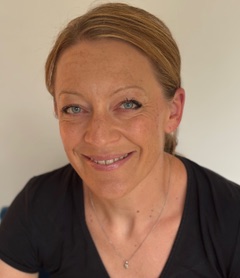
Dr Caroline Platt
RCPCH Officer for Genomics and Consultant Paediatric Nephrologist, University Hospitals Bristol and Weston NHS Foundation Trust
Caroline is a Consultant Paediatric Nephrologist working in Bristol. She has an interest in Genomics and is currently the Genomics Officer for the RCPCH and chair of the Genomics Working Group. She is currently the regional chief investigator for the Generation Study (newborn genome screening) in the southwest and the south west genomic medicine service clinical lead for rare disease.
Dr Helen Oram
Reader and Consultant Paediatric and Adolescent/Young Adult Haematologist, King’s College London
Dr Helen Oram is a Reader in MBBS Assessment and Head of Assessments for the MBBS programme at King’s College London. She is also a Consultant Paediatric and Adolescent/Young Adult Haematologist with interest in transition to adult care. She leads work on artificial intelligence in education within the Faculty of Life Sciences and Medicine at King’s and has undertaken research into the use of generative AI in assessment and education, including studies involving human participants. Her interests include ethical implementation, research governance, fairness and inclusion, and maintaining meaningful human oversight and accountability when AI is used in research, education and clinical practice.
Dr Andrea Cockett
Reader: Education Innovation and Research, Faculty of Life Sciences and Medicine, King’s College, London
Andrea has worked in the Faculty of Life Sciences and Medicine at King’s since 2024. She has a professional background in nursing and previously worked in the Faculty of Nursing, Midwifery and Palliative Care at King’s in senior leadership roles. She holds a Doctor in Education from University College London and is a Principal Fellow of Advance HE.
Andrea's research interests focus on assessment and feedback in higher education, interventions to reduce the awarding gap and the use of AI in education. She has also led collaborative projects across London to develop innovative solutions to increase placement opportunities for students. One of her recent projects, to develop a student advocate role to support students at risk of leaving healthcare programmes, won a London Higher Award in 2024 in the outstanding support for student wellbeing category.
She is currently working as an expert advisor on the use of AI in education with the Council of Deans. The Health and Care Professions Council as well as within her own institution.
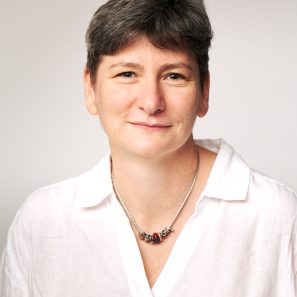
Dr Joanna Garstang
Clinical Associate Professor, Consultant Community Paediatrician, University of Birmingham and Birmingham Community Healthcare NHS Trust
Dr Joanna Garstang is a Clinical Associate Professor of Child Protection at the University of Birmingham (UK), Consultant Community Paediatrician and Designated Doctor for Child Death for Birmingham and Solihull. Her specialist areas are in safeguarding children, Child Death Review and Sudden Unexpected Death in Childhood. Her research has focusses on improving multi-agency working in safeguarding and preventable child mortality. Joanna has been part of the team conducting analyses of Local Child Safeguarding Practice Reviews.
Joanna completed an NIHR study ‘Involving Parents and Staff in Learning from Child Deaths’, developing a Child Death Review toolkit with bereaved parents. She led a study ‘Improving Safeguarding Outcomes following adoption or Special Guardianship’, funded by the Nuffield Foundation. She is currently leading research on risks of vaping and infant death and improving care for families after sudden child death.
Joanna is Chair of the Association of Child Death Review Professionals, Chair of ISPID (International sudden infant and child death) and a Specialist Medical Advisor to the English National Child Mortality Database.
As of 1st September 2016 the Revalidation and CPD team of the Royal College of Paediatrics and Child Health no longer allocates a number CPD credits to courses or events. The removal of credits associated with events allows delegates to record the educational benefit of the activity through written reflection, in contrast to quantifying the significance based on the time duration of the course. This is in accordance with changes made to the CPD Scheme guidelines published in April 2016.
Detailed information and scheme guidance can be found on the RCPCH website
When recording the activity, delegates should focus on the reflection and detail the following:
- What did you learn?
- What effect has/will the learning had/have on your current practice?
- What further learning or action, if any, is needed as a result of the original learning activity?
Should you have any questions regarding the removal of credits, please feel free to contact the CPD team
If you use the RCPCH CPD Diary, you can click here to visit the diary and record your learning: Log your learning on the RCPCH CPD Diary
Found an issue? Please get in touch with us:
Email us at rcpchlearning@rcpch.ac.uk