
Length
450 minutes

Target Audiences
- Health professionals working in low resource countries

Self-paced
Work through the module at your own pace.When you have completed the module, you can return at any time to re-review any of the sections.

Free
Log in with your account
How to use this page
This resource is available to both RCPCH members and non-members, and you can enrol using your RCPCH number and password. If you are not a member of the RCPCH and do not have an RCPCH Number and online login, you can find instructions here
You will find the course content below. This Caring for newborns in low resource settings eLearning has 14 steps:
1-13) The elearning package
14) The post-course evaluation form
Once you have completed the eLearning package, a ‘Mark complete‘ button will be available. Click this button to complete the section.
Next, complete and submit the post-course evaluation form, and click the ‘Mark complete‘ button
Once all steps have been completed, a downloadable certificate of completion will be issued on the page.
If you have any questions, please contact the RCPCH Learning team
Course information
About the online learning
This online learning package was previously titled “Neonatal eLearning Programme for Myanmar”. The package has been revised and updated to be relevant to all low resource settings.
The aim of the course is to give you the knowledge and skills to help you care of every baby you see, whether well, small or sick both at community or facility level.
The early modules focus on simple measures which safeguard vulnerable babies and give them the best possible start. Later modules will take you into the more complex diagnoses and treatments undertaken in more advanced neonatal units.
The course stresses throughout the importance of involving the parents in the care of their baby, and giving them the confidence and knowledge to cope well when the baby goes home.
The early modules are relevant for any healthcare worker who is involved with mothers and babies, whether a midwife, nurse, primary healthcare worker or doctor.
Later modules cover the care of a baby in the neonatal unit, and will be of interest to nurses and doctors working there or rotating through as part of their training.
Feedback and contact
If you wish to provide any feedback or would like to know more about the programme, please contact the team at global@rcpch.ac.uk.
Acknowledgements
This learning package has been developed as a collaboration between doctors and nurses in Myanmar and the UK.
Partnership
This learning package is part of a longstanding partnership between RCPCH and UNICEF Myanmar. We thank them for their generous support.
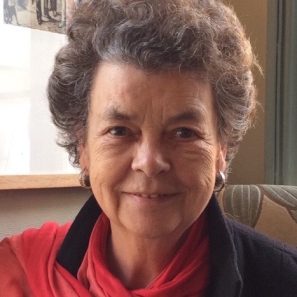
Dr Jean Bowyer
Former RCPCH Global Consultant Advisor
1944-2025
Jean was a devoted paediatrician who throughout her career was an advocate for Global Child Health. She also had a lifelong commitment to support Palestinian families and children. She played a leading role in developing the RCPCH’s partnerships in Africa. She was instrumental in rolling out the expanded Emergency Triage Assessment and Training model (ETAT+) and then adapting this for Myanmar in Asia.
Jean’s knowledge and expertise covered all aspects of Paediatrics but her first love was neonatology. She helped develop the Myanmar Neonatal Care Programme (MNCP). On February 1St 2021, this very successful in-country programme came to an abrupt halt after the take-over of Myanmar by the military junta. Jean then wanted to find a way to continue to support the medical community who had become her friends over the previous 10 years. Her idea was to develop an online interactive E-learning programme for doctors, nurses and healthcare workers involved in looking after mothers, newborns and their families.
It has become clear since the first modules of this programme were launched by the RCPCH that they are proving to be a valuable resource for medical staff working in any low resource setting. The Neonatal E-learning programme has now been revised to make it applicable to worldwide settings. It was mainly written by Jean, but after her death this second edition has been updated and completed in her memory.

This package has been developed by a collaborative team of Burmese and UK clinicians.
Creation and review log
| Creation/review | Date |
|---|---|
| Launch date | August 2023 |
| Revised | November 2025 |
As of 1st September 2016 the Revalidation and CPD team of the Royal College of Paediatrics and Child Health no longer allocates a number CPD credits to courses or events. The removal of credits associated with events allows delegates to record the educational benefit of the activity through written reflection, in contrast to quantifying the significance based on the time duration of the course. This is in accordance with changes made to the CPD Scheme guidelines published in April 2016.
Detailed information and scheme guidance can be found on the RCPCH website
When recording the activity, delegates should focus on the reflection and detail the following:
- What did you learn?
- What effect has/will the learning had/have on your current practice?
- What further learning or action, if any, is needed as a result of the original learning activity?
Should you have any questions regarding the removal of credits, please feel free to contact the CPD team
If you use the RCPCH CPD Diary, you can click here to visit the diary and record your learning: Log your learning on the RCPCH CPD Diary
Found an issue? Please get in touch with us:
Email us at rcpchlearning@rcpch.ac.uk